
Sardinia, Italy: A road trip around an island in the Mediterranean Sea
- Jennifer
- Aug 15, 2025
- 11 min read
Updated: Aug 16, 2025

After being apart for four weeks, we reunited in Milan airport to fly to Sardinia and enjoy two weeks exploring the second-largest island in the Mediterranean (the largest, Sicily, is where we spent last summer, read about northern Sicily here and Taormina here).

Sardinia, off the west coast of Italy, is one of the most geologically ancient bodies of land in Europe; the island's rocks even date back to the Palaeozoic era. Once we started our journey we quickly learned there isn't much here— lots of history, not lots going on. The island is old. Its history includes being conquered over and over again. And many of its inhabitants are wild (it's home to nearly 4 million sheep and plenty of wild boar!).
That said, if it's peace and quiet, gorgeous landscapes, and brilliant blue sea you're looking for, you'll find it here (not to mention amazing food and wine). Maybe that's why Sardinia is designated a "blue zone,"—a geographic region where people live measurably longer and healthier lives than anywhere else in the world. If you lived here you'd be in no rush to leave either!

The flight from Milan to Olbia, a coastal city in northeast Sardinia and one of the island's three major airports, was a quick 90 minutes. We were starting in the north and going, clockwise, around the entire island, which is only 9,300 square miles, so we were going to take our time and see lots of places along the way. Although our trip began on the Costa Smeralda, or the Emerald Coast, we knew we were going to spend plenty of time by the area's famous crystalline waters and sandy beaches so we first headed up into the rugged, mountainous interior of the Gallura region.

From the moment we drove up the gated dirt driveway we knew we were in for something special at our first stop, Stazzo Lu Ciaccaru. Formerly the dwellings of tenant farmers, the owner painstakingly renovated the buildings to create a wine resort where there are always sunset views, the food combines traditional local ingredients and innovative cooking, and the sounds of crickets and cicadas lull you to sleep at night. We feasted on fresh-caught seafood, handmade Gallurian pasta, and wine from vineyards we could see from our table. And every night we sat on the patio bar and chatted with Aldo, the expert barman who loved showing us his talent and sharing conversation. This place is a must visit if you're in the northern region, and one of our favorite places from our trip.


We did venture away from our little slice of heaven to check out Tomba Dei Giganti —the Tombs of the Giants. The remains of thousand-year old civilizations, these are tombs of uncut stone slabs buried on end in the ground with a central door in the largest slab. We were expecting great, giant things from this ancient grave site!

What we encountered...not exactly great or giant. The first one took us about ten minutes to visit and we called it quits after that (there is a whole "trail" of these you can find all the way to the city of Obia). But if looking at rocks and history is your thing, perhaps you'll spend more time.
With that checked off our list, we decided to find the barbeque restaurant (and its self-proclaimed "pit master") we noticed on a small sign by the site. We drove down lots of winding back roads and eventually just parked and started walking a narrow bushy trail until, finally, we found it peeking out from behind a stone building...the green egg grill that this "BBQ pitmaster" staked his reputation on. Although we were the only people there, and we didn't order any BBQ, we had a fantastic time off the beaten path with ice cold local Ichnusa beer (Sardinia was super-hot) and delicious meats and cheeses. We always say, sometimes the most unexpected, unplanned places turn into the most fun experiences (travel serendipity).



The Gallura region (Gallura means "stoney area") is home to wonderful vineyards, so before leaving we visited Surrau winery for a tour and tasting with local specialty foods. Lesson #2 (if lesson #1 was "giant tombs are not that impressive") ...make sure when you book your tour you choose the correct language. There were only three people on our tour, including the two of us, but the entire tour was directed to the single other person...who spoke fluent Italian. It was still super interesting to see the inner workings of the vineyard and attempt to translate.


The vineyard's owners, the Demuro family, are native Sardinians and have practiced viticulture for generations. Today the vineyard consists of 60 hectares of Vermentino, Cannonau, Carignano, Bovale, Caricagiola, Syrah and Cabernet Sauvignon grapes. We became serious fans of Sardinia's Vermentino, (a medium dry, refreshing, white varietal) and it would become our go-to during our time on the island. This was truly some of the best wine we've ever had, and we left with more than a few bottles to join us on our journey!

Time to head to the coast! 45 minutes later, we finally saw the storied waters of Sardinia! When choosing where to stay we forewent the bustle of nearby San Teodoro for the more serene and secluded Puntaldia peninsula. We stayed at Lune Puntaldia Resort, a small beachside hotel that, according to the two brothers who created it, was inspired by "full moon nights and the magic of its reflection in the sea." Sounds about right!


There was a small marina and piazzetta with restaurants and cafes in a walkable little village nearby, but we also ventured to San Teodoro one afternoon for lunch and were reminded of lesson #3: Public beaches in Italy are chaos! Umbrellas are stacked up one after another, beach blankets and chairs create one long stretch of people, and plastic beach buckets and shovels and kids are digging up any remaining spots of sand.

Rule of thumb, if there's a parking lot, the beach is also a parking lot of people. We left San Teodoro grateful to return to the peace and quiet of our little beach.
Further down the coast, our next stop, the small seaside town of Dorgali, was 90 minutes away and the antidote to San Teodoro. The ride to Dorgali required narrow switchbacks up rocky mountains and steep inclines that made us not want to look over the edge, but upon our bare-knuckled arrival we got to enjoy panoramic views of mountains all around and the Cala Ganone bay in the Gulf of Orosei at our doorstep.


The real attraction here is the nature. There are many hiking trails and coves along the coast, but only the really determined find their way to the stretches of white sand and sea...and they are definitely rewarded! We hiked for a few miles up and down craggy rocks and along ledges but the views along the way and the beach that awaited us were well worth the effort! When we reached the beach, it was exactly the beautiful, refreshing spot we anticipated!


After spending our days exploring the coasts' beaches and small towns, it was time to go big: Sardinia's capital city of Cagliari. "Big" may be an exaggeration, but this lively Mediterranean town of just over 150,000 inhabitants within the city limits—and 400,000 people in the greater metropolitan area—makes up 25% of Sardinia's entire population.


When we arrived at our hotel, Casa Clàt, it was like discovering an oasis in the city. With nine unique and impeccably designed suites housed in a 19th-century building, this place was definitely one of our favorite hotels of the trip. Not only was the place beautiful, but it also held an amazing secret—a private garden with pool and cocktail patio, as well as a restaurant serving some of the best seafood we had on our trip. Right in the center of the city! And the best thing? Every night they served oysters and the most delicious cocktails by the pool. It almost made us never want to leave the hotel, but we had so much to see!


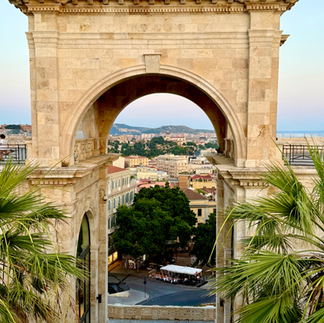


Known for its hilltop Castello, the medieval walled quarter high above the town, as well as (of course) its surrounding beaches, Cagliari is quaint in an old-world sort of way. It's not so big that you need to spend a lot of time here but the variety of restaurants and sites is a great way to pass a few days if you long for hustle and bustle—visiting Bastione di Saint Remy, Cagliari Cathedral, and the Mercato di San Benedetto are just a few ways to spend your time here.


When we were visiting, the Umberto terrace atop the Bastione di Saint Remy was hosting a literary festival and the place was filled with people, music, and readings. And the sunset from there was unreal...you'd never even know you were in the center of a city. While there were ancient sites and monuments to see, our favorite day was spent wandering the small alleyways, mostly because they got us out of the sun and into the shade! But it was a great way to find cute out-of-the-way shops, great little places for sandwiches and local fare, and, most importantly, cold beer! When we say it was hot, we
mean realllllly hot! You don't need much time in Cagliari; a few days is perfect. And by the time we were done we were ready to leave the city behind and head to the southernmost tip of Sardinia.


At this point we were halfway through our travels—only four hours from where we started— and yet we'd gone halfway around the island. Our next step was the opposite of city life—Domus de Maria. Again, not much to do here but enjoy the beach, take hikes to secluded spots, and enjoy sun, sand, and sea...and the sea was stunning!

It was lots of fun to hike across rocks and along the coast, popping into blue pools whenever we got too hot, which was often! Even our Ichnusas needed to cool off! And who could blame them? The water was the solution to everything!

We couldn't wait to get to our next stop, Hotel Le Dune Piscinas, because it doesn't get any more isolated than a place set alone on golden sands at the end of a long dirt road on Sardinia's Costa Verde. We drove for almost ten miles on nothing but a bumpy dirt road anticipating what we'd find at the end—and it really is the end because the road doesn't have anywhere else to go.

There is nothing on the way to Le Dune Piscinas except a ghost town—literally! We drove past an eerily deserted mine that was once one of the largest in Sardinia. The area's abandoned wagon rail, which once transported lead, silver and zinc from mines, actually ends at the hotel spa.
But that's where the creepiness ends, because as soon as you enter the hotel you feel like you are staying in an art gallery. And there's a reason! Every year, the hotel hosts an artist in residency. During their stay, the artist creates works to establish "a dialogue between the surrounding landscape, the hotel, and their own artistic vision." The resulting art becomes part of the hotel's permanent collection. There's even a sculpture on the beach!


But that's about all there is because this place is as close to nature as you can get. It's easy to see why this region of Sardinia is called Europe's 'little Sahara.' It's nothing but sand and enormous dunes as far as you can see. Oh, and the sea, of course. And it's blue and perfect. Joe decided to explore the dunes one 100-degree day and was warned to stay away from the wild boar, which may look cute don't like sharing their space. He didn't encounter any boar but did find some snake trails slithering in the sand. Glad he went alone.

We were lucky enough to be there when a local woman was teaching guests about regional pasta. Each region in Sardinia has its own way of making pasta in distinctive shapes to signify the region. It was hypnotic to watch as she curled, rolled, and twisted the pasta by hand into each region's unique shapes.
Speaking of pasta, the food here was incredible and served on the hotel's seaside patio every night with a view of the sunset. There was also a beautiful (and cool, to get out of the heat) bar for afternoon aperitivo and cocktails. But that doesn't mean we didn't venture a few miles away—walking the dusty road—to scout out some lunch! Which we found at, of all places, a campground! A lovely little restaurant tucked among the dunes. Yummy!


Alghero, a city founded in the 11th century by the Genoese, was the second to last stop on our road trip.

Located on the northwest coast of Sardinia, the town—and its Catalan Gothic buildings—is encircled by ancient fortress walls and known for its cobblestoned old center.

It also has lots and lots of churches, but the Church of San Michele is probably the most recognizable, and its Baroque architecture and majolica-tiled dome make it a significant landmark in the city's historic center. It was super hot, so, like in all of Italy, the town gets quiet mid-day. Shops and restaurants close and you're on your own to figure it all out.

We decided to grab a sandwich at a little place selling meats, cheeses, and olive oils, and have ourselves a picnic. And because boar is plentiful and on lots of menus in Sardinia, we had boar and pecorino sandwiches. They were huge, delicious, and we are big fans!! If you can ever score yourself a boar and cheese sandwich in Italy, do it!!
That day we also decided to drive to the Capo Caccia promontory, a dramatic stretch of coastline about 30 minutes away. Neptune's Grotto is there, but we've had our fill and have sworn off grottos for the foreseeable future. Still, there were plenty of people there to see the underground water cave. The area is also part of the Porto Conte Regional Park and the Capo Caccia-Isola Piana Marine Protected Area, and home to a lighthouse built in 1864. It's a great way to view the coastline and Alghero from a different vantage point. Especially if your car has A/C for your drive.


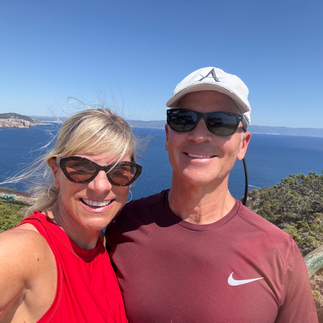
Our hotel in Alghero, Villa Las Tronas, was once the vacation residence of Italy's royal family, and the stunning location was befitting kings and queens. Although we were within walking distance of the town of Alghero, the villa is situated beside the sea on a promontory between Cala Lavatoio to the north and Cala Capone to the south. We walked through a century-old park filled with beautiful green trees and flowers to get to town. The views and sunset here were spectacular. OK, every sunset and view in Sardinia was spectacular!


Last up...a return to the Costa Smeralda, the Emerald Coast.

For our last few days on the island we were back on the coast to enjoy a small boutique hotel on Conca Verde beach, one of the most charming and secluded coves in the Santa Teresa Gallura area. At this point we were gearing up for some time in Berlin, so we wanted to enjoy the small town, local restaurants, gelato, and floating in the sea before the bustle of Germany's capital city.
We were tempted to take a boat to the archipelago of La Maddalena, a national park and group of islands with turquoise lagoons, deserted islands, and white beaches. But, really, did we need any more proof that Sardinia was the perfect beach vacation?





So instead we settled for our view of the islands from the hotel, and enjoyed our last Sardinian meals, the final one at a local waterside restaurant where our feet were in the sand and the fish was fresh caught and just off the boat.

And, as if we needed a final sign that Sardinia was sending us off, we finally met up with some local boar having their own Sardinian meal in a field.

We didn't know what to expect from Sardinia, but it was exactly what we needed. Beautiful views everywhere you look, kind and welcoming people, and local food made with love. You don't go to Sardinia looking for action. You go there to get feel like you've left the world behind. And that's exactly what we needed.

Note: Usually we do all of our own travel planning, but this time we had help from our wonderful niece, Kate, who is a traveler planner with Fora Travel. She was an invaluable resource for our two-week trip to small towns and out of the way places (and scored us some sweet upgrades and extras). Thanks, Kate! You can learn more about her services here.
Come along on our next adventure! Follow us on Instagram (Worldwide.Wizas) and Subscribe to our blog today!
Enjoy a taste of our travels with drink recipes on Instagram - Worldwide.Cocktails.