
Poland Road Trip: From the Baltic Sea to the Tatras Mountains

We'd always wanted to visit Poland, so when we were looking for a place to spend three weeks in the fall, we decided it was time. After hours of figuring out where to go, we settled on a road trip from Gdansk in the north to the Tatras Mountains on the Slovakian border. Ready to join us? Let's go!

Gdańsk
Our fist stop: Gdansk, Poland's sixth-largest city and a major seaport located on the Baltic Sea. Our hotel was right in the old city center, so we were immediately struck by the beautiful architecture, a blend of Dutch, Flemish, Gothic and Baroque. It would have been easy to think these buildings had been standing for centuries...except 90% of the historic center was destroyed during World War II. When it came time to rebuilt after the war, the cities in Poland had a decision to make: restore them to their former glory or start over with a more modern look. Fortunately for all of us, the government decided to restore the buildings to their original design (which, if you didn't know better, you'd think you were in Copenhagen or Stockholm due to the architectural influence of its shipping heritage).
Gdansk isn't the biggest city, but we got really lucky making it our first stop for a few reasons:
1. The food. It's incredible and was a great foray into Polish (and even Georgian) cuisine. From our first duck, pork, and potato & cheese pierogis, to the ice cream and donut shops every few yards, we knew we'd be well-fed for three weeks. Who knew ice cream—lody—was such a big thing in Poland? Or that donuts filled with everything from fresh berries and jam to custards and chocolate were so popular? We made up a very fun lody lady song that stuck with us for the duration of our trip (sung to the tune of Bob Dylan's 'Lay Lady Lay').
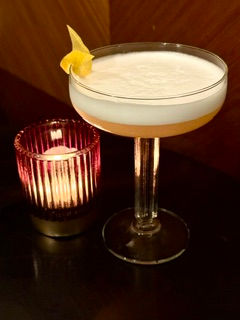
Another surprise: bagels were invented in Poland, and they're sold from street carts by vendors everywhere. You can't go wrong at most restaurants in Gdansk, but we did discover a hidden gem, a speakeasy called Gatsby. Not only was it a step back into a time when Jay Gatsby and his friends lived a more genteel life, but the bartender and server were so friendly and lovely, and the cocktails amazing, that we'd call this a must-do in Gdansk.
2. The museums. While Gdansk doesn't have the greatest number of museums, it did have two that set us up for the entire trip. We started at the Museum of Gdansk, which documents the history of the city from the Middle Ages to the present day.

It's located in the stunning old Main Town Hall and has incredible artifacts and art that helped us glimpse the history of the city (and, boy, was there history).
Next, we went to the Museum of the Second World War. Wow. For three hours we walked through a massive 6,000 square meter building that is both museum and memorial, a stunning contemporary design with architecture that symbolizes the past (underground), present (ground level) and future (the tilted tower).

We can honestly say that our visit here informed the rest of our trip, taking us through the tragic experience of World War II, its genesis and consequences, victims and perpetrators, heroes and ordinary people. What we learned here gave us a lens through which to view everything else we saw, a reverence for the Polish people and others who suffered during the war, and a sense of awe for rebuilding after such a tragedy.

We didn't know it when we were planning our trip, but Gdansk was the absolutely best place to start our Poland travels.
There are around 500 standing castles in Poland (with 2,000 total castles and castle ruins scattered across the country), and we were planning to see a bunch on our travels. On our way to our next stop, Torun, we visited Malbork Castle, the largest brick castle in the world, built in 1274 by the Teutonic Knights, a German religious crusader order. It was a great break from our drive and lovely to visit (especially for Joe who loves himself some armor).
Toruń
Although it's not well-known to travelers, Torun is a medieval city on the Vistula River, a UNESCO World Heritage Site, and the birthplace of the Renaissance astronomer Nicolaus Copernicus, who formulated the heliocentric model of the solar system. But, for us, it served two important purposes: it was a stop on our way to Wroclaw, and it's the home of a traditional Polish gingerbread that has been produced here since the Middle Ages. Only one of us likes gingerbread, but we had to visit the Gingerbread Museum and learn about Pierniki Toruńskie, as they are known in Polish. We actually made our own gingerbread "cookies" (they were hard as rock because gingerbread was once used as art to hang on the walls of wealthy people). It was tons of fun. We ended our day with local beers and a fabulous dinner at Restauracja Chleb i Wino.
Wrocław

Wroclaw is the capital of the Lower Silesian region and spent centuries under German rule before returning to Poland after World War II. The city is comprised of 12 major islands along the Oder River and more than 110 bridges. We stayed on Cathedral Island, featuring Gothic cathedrals, historic churches, and an evening gas lamplighter ritual—it was beautiful walking home every night and super close to the main square, Market Square.
The entire city was bustling, with the square filled with musical performers serenading us with accordions and traditional music, church bells, and lots of goings-on (we sat outside at a restaurant and watched it all while eating pierogis and playing cards, it was perfect).
There are more than 1,100 small bronze dwarf statues hidden around the streets, originating from a 1980s anti-communist protest movement—cute and purposeful! They pop up unexpectedly in all sorts of places and always have a connection to their location, such as a karaoke gnome in front of a music store and the gnome sleeping in a bed in front of our hotel.
There are several museums in Wroclaw (including the National Museum, Panorama Racławicka). We were in the mood for some contemporary art, so we went to the Four Domes Pavilion to see Polish art from the second half of the 20th and 21st centuries. This is probably a good time to mention that English is spoken mostly everywhere in Poland, so language was never an issue (although we did say plenty of Dziękuję and Dzień dobry in our attempt to be local). So, when the woman at the museum ticket desk wasn't understanding us, she pointed to a sign and said something that sounded like, "contemporary?" and we nodded.

And that's how we found ourselves not in the contemporary exhibit but in a temporary exhibit of Silesian religious art from the Middle Ages. Not what we bargained for, and not really our taste. We decided to make the best of it and visited with the very un-modern religious statues and paintings and laughed at ourselves for the misunderstanding. After that we decided we'd had enough and walked over to Centennial Hall to sit outside and enjoy a few beers while watching the fountains. No language barrier there.

There's plenty to do in Wroclaw, a botanical garden, boat tours down the river, and lots of places to eat and drink outside while watching the action. We loved our time here but were ready to head to the bigger city, and capital, of Warsaw.

Warsaw
The capital and largest city in Poland, Warsaw was bustling wherever we went. We stayed on the cusp of the old town along the Royal Route and beside the Presidential Palace, in one of the city's oldest and grandest hotels, the Hotel Bristol. We had a great location to explore, an 'epicurean moment' every night in the lobby with local Polish spirits and food, and history all around us.

We even had a chocolate shop across the street that made the most decadent hot chocolate using Wawel chocolate, one of Poland's oldest confectionery companies (it was like drinking pudding...so yummy).
Like other Polish cities, Warsaw was heavily destroyed during World War II and meticulously rebuilt, so we had a lot to see!
There are so many museums to visit in the city, including the Warsaw Uprising Museum, the POLIN Museum of the History of Jews, the Polish National Museum, the Royal Castle, and the Museum of Modern Art.

After the debacle at the contemporary museum in Wroclaw, we opted for the Museum of Modern Art...on a Monday. And, as you know, ,if you're an art museum person, they are often closed on Mondays, which was the case as we remembered walking up to it. We decided to go again the next day and also to visit the Warsaw Uprising Museum. Oh, please learn from our mistakes! While the art museum was open on Tuesday, the Uprising museum wasn't, so we missed it, which was a real bummer. We'd really wanted to go. The Museum of Modern Art did have a really interesting exhibit on Surrealism and Antifascism, so fitting for our time here!
We did get to see so much, though, as Warsaw is super walkable and the weather in October was amazing! There is a stunning park, incredible memorials and war monuments, and lovely streets to wander (and have a lody cone while doing so).
We can't say enough about Polish food, and we had some stellar meals in Warsaw, including Delicja Polska for upscale Polish fare and Portretowa, which was like eating in your Polish grandmother's house (that's it below).
We left Warsaw on our way to drive the Eagle's Nest Trail, a 164-kilometer route with roughly 25 medieval castles, fortresses, and watchtowers perched high on limestone cliffs and rock formations. Most castles date back to the 14th century and were built during the reign of King Casimir III the Great to protect the western border of the Kingdom of Poland. Incidentally, Casimir happens to be Joe's middle name!
After being on the road for almost two weeks, we were ready for a little R&R, so we stayed at Poziom 511, a spa and wellness resort tucked right beside Ogrodzieniec Castle, the largest castle on the trail.
In addition to a relaxing pool and spa, the resort is also home to Białe Skały Vineyard, which originates on the grounds. The wine was spectacular, and if we could have filled our suitcases to take a bunch home we would have! Polish wine, we never imagined how good it might be! Between the wine and the sound bath experience with singing bowls and the castle outside our door, this was the recharge we needed for our next stop, Krakow.
Kraków
We loved all of Poland, but Krakow, the country's second-largest city, was especially wonderful. Our hotel, H15 Palace, was in the city center, right beside all that is wonderful about Krakow: the history, the food, and all the action.
The city center's main square was filled with activity, especially every hour on the hour when a trumpeter would appear in the top window of the cathedral and toot his horn (it occurs 24/7). Wawel Royal Castle museum is right there and we visited to see the art and hear the stories about its occupants. We'd wanted to visit Oskar Schlindler's Enamel Factory, but it was free that day and the line was way too long so we decided to bow out, but we saw the outside, does that count?
On our walk home we experienced lots of local neighborhoods and a very cool bridge with sculpted acrobats...there's also a "fire breathing dragon" (Krakow is the city of dragons, just like Wroclaw is the city of gnomes), we waited for him to breath fire but it lasted all of ten seconds so lots of waiting...not a lot of fire, but still cool! So many fun little things we wouldn't have known to even look for!
We enjoyed the local cherry liqueur as well as a flight (or two) of local vodka, which was really great. We always try to experience local entertainment, so one night we had dinner while dancers performed traditional Polish dances and music—we were also invited to join along and that was so much fun!
On our last night in Krakow we wanted a truly special local experience, which is why we went to Pod Aniołami, a must-do in the city. With an open fireplace where the meat is cooked (the most luxurious duck, boar, lamb, and goose), and an atmosphere that feels like you're in a hunting lodge from centuries ago, we absolutely loved it.

Our last stop was the Tatras Mountains, a rugged alpine mountain range that acts as a natural border between Slovakia and Poland in the Western Carpathians. But on the way we spent a day at Auschwitz-Birkaneau, the largest of the German Nazi concentration camps and extermination centers. Over 1.1 million men, women and children lost their lives there. No photos were taken except this one over the entrance, the sign that reads Arbeit macht frei, "Work sets you free." It was a falsehood meant to lull the prisoners into a false sense of safety. It is truly a place that affects you at a profound level.
Zakopane

Known as the "winter capital of Poland," Zakopane is a resort town at the foot of the Tatra Mountains. It feels very much like a small ski town, and also super touristy, which was pretty amusing. Small carts sell traditional smoked cheese, called Oscypek, everywhere (they look like ravioli but are super hard and super smoked). Honestly, not a favorite.
We hiked, played cards, and just unwound from our three week drive.
On our last day we ventured into Slovakia and enjoyed lunch in another little ski town with authentic Slovakian food, which was also delicious. We took the gondola up the ski mountain, Bachledka, and surveyed the Tatras around us, reflecting on our amazing journey through Poland and how much we enjoyed it. There was no snow yet in Slovakia or Poland, but we were already looking forward to the ski season a few weeks away.

What a trip! Poland exceeded our expectations. There's so much history, such struggle and devastation, and still a resilience here that exudes tradition and joy. The friendliness and warmth of the polish people was unforgettable. And can we just say one more time...Polish food and wine, get yourself some...incredible!
Come along on our next adventure! Follow us on Instagram (Worldwide.Wizas) and Subscribe to our blog today!
Enjoy a taste of our travels with drink recipes on Instagram - Worldwide.Cocktails.


Comments